


The Best Furniture for Estheticians: What Actually Makes a Difference for Clients and Artists
The furniture in your treatment room does two jobs: it affects the quality of the experience your clients have, and it affects the physical toll your practice takes on your body. Most estheticians invest carefully in one of these and not enough in the other.
Here is an honest comparison of every major furniture option — what each actually delivers, and where the real differences are.
The Treatment Bed: Where The Decision Matters Most
Your treatment bed is the piece of furniture clients interact with for the entire length of every appointment. It is not background — it is the central experience. It is also the piece of furniture in every photo of your suite, in every client story, in every referral.
The comparison breaks into three real categories.
Facial Tables
Facial tables are the standard starting point because they are widely available and cost-accessible. They are also the most limited option in terms of client comfort and professional presentation.
Standard facial table construction is plywood base with foam on top. When a client lies down, their full body weight compresses the foam against that hard base — there is nowhere for the surface to give. For a client who tenses during extractions or has any lower back sensitivity, the flat, firm surface compounds discomfort rather than minimizing it. For a client lying perfectly still for 90 minutes, it creates the subtle restlessness that makes long services feel long.
The other ongoing cost: facial tables require linens. Every client means setup and breakdown. Over a full week of appointments, that laundry is not a trivial commitment of time and resources.
Imported Spa Beds
Imported spa beds in the $2,500 to $4,000 range are positioned as the professional upgrade. The pricing does not always match the product.
When you spend $3,000 or $4,000 on an imported bed, you are paying for the product plus the entire cost of getting it to your door: ocean freight, port fees, warehousing, domestic distribution. That supply chain overhead is often a significant portion of the total. The bed itself — the actual manufactured product — is worth considerably less than the invoice suggests.
This shows up over time in how the bed feels and how it lasts. A bed that costs $500 to manufacture, with $2,500 in logistics layered on top, is priced like a premium product but built like an economy one.
Plush + Oak Beds
Plush + Oak beds are made to order and shipped directly from the manufacturer. You pay for the product and the shipping — not for a layered supply chain.
The construction difference is fundamental. Under the foam of every Plush + Oak bed is a full tensile webbed suspension system — woven tensile webbing instead of plywood. When a client lies down, the surface suspends her rather than resisting her. The bed flexes and breathes. It has genuine give — not the soft collapse of foam on plywood, but the springy, supported feel of quality furniture.
A client on a Plush + Oak bed is comfortable in a different way than a client on a facial table. The body is cradled rather than compressed. For 60-minute facials this is a noticeable improvement. For 90-minute treatments, the difference is the difference between a client who recommends you and one who does not.
The foam does not break down over time because it is never being crushed against a hard surface. Foam on plywood flattens. Foam on tensile suspension does not. For high-volume practices, this longevity matters.
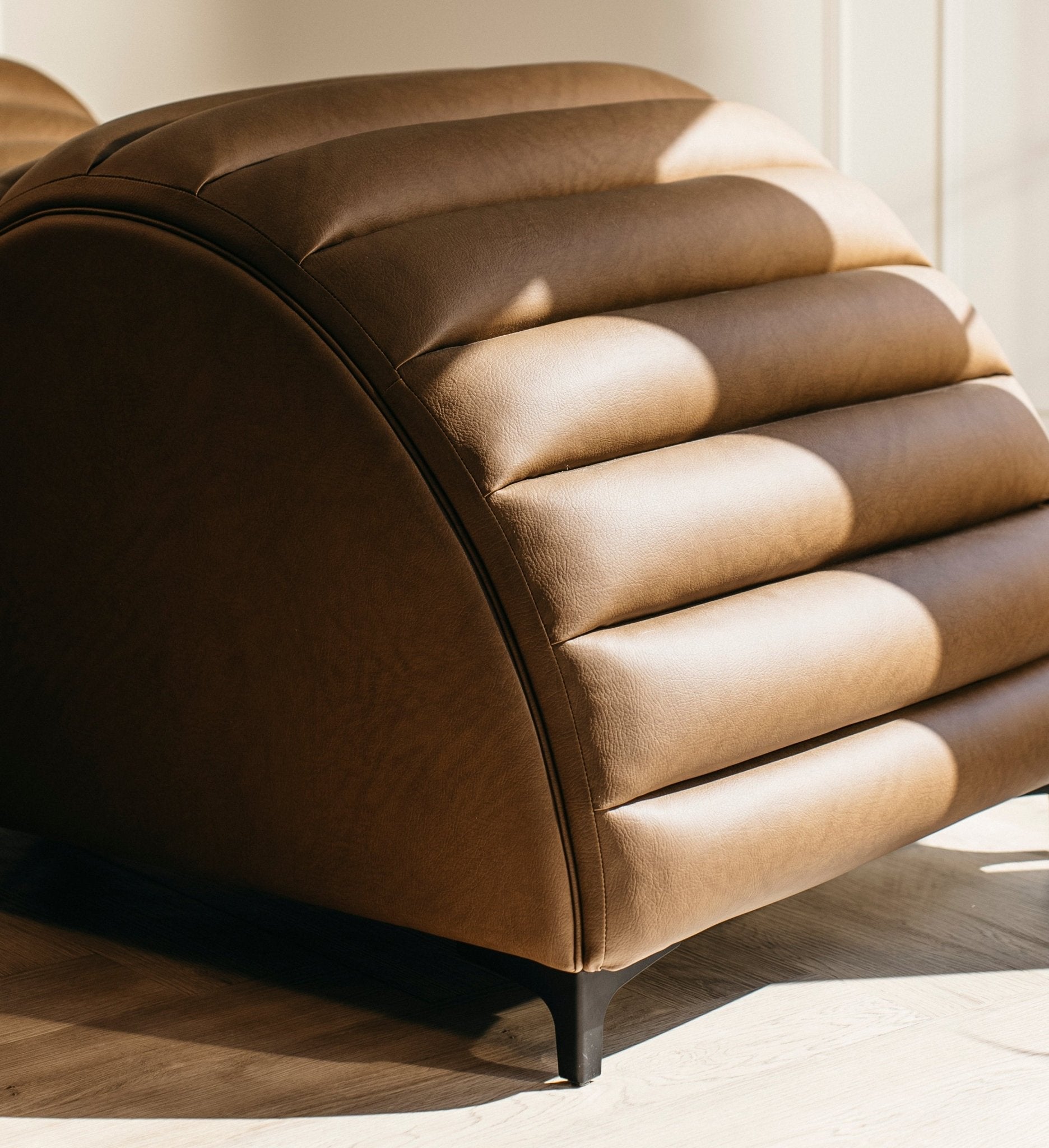
No sheets required. The premium upholstery is designed to be wiped clean between clients.
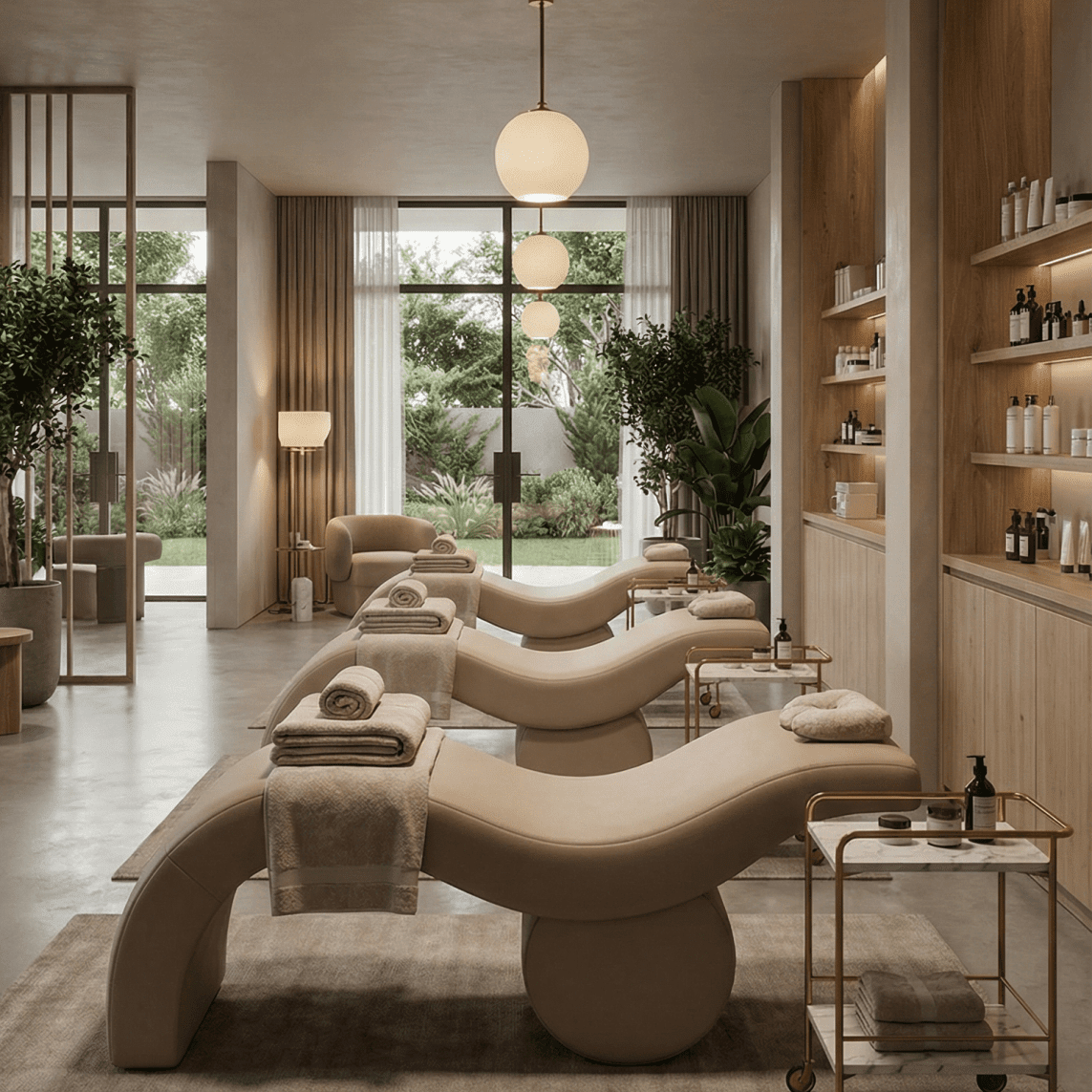
The Edda Cloud and Brynn are the right choice for standard esthetics work — facials, skin treatments, brow and lash services. Both feature the deep anti-gravity ergonomic curve and the open leg clearance for artists working close to the head. For clients who need to sit upright during a treatment, the Vera LOFT reclines from fully flat to a true 90-degree sit. For height adjustment without floor cords, the Vera 360 adds hydraulic control and swivel.
Every bed is made to order in the color you choose — not from a limited stock palette, but from a range that lets the bed become part of your room's aesthetic identity.
The Stool: The Investment Most Estheticians Underestimate
Your stool is the second most important piece of furniture in your treatment room — and the one most estheticians spend the least time choosing.
You sit on that stool for the duration of every appointment, in a position that combines sustained focus with frequent small repositioning. Generic stools and office chairs are not designed for this. Over months and years, the wrong stool contributes to the lower back and hip problems that end careers early.
The Plush + Oak stool was designed specifically for beauty professionals. The open back eliminates tailbone compression. A low back rest supports posture without restricting movement. Silicone rollerblade wheels are silent on any surface, letting you move around the bed without interrupting the client experience.
It is purpose-built for the work. The difference from a generic stool becomes apparent within the first week.
The Real Cost Comparison Over Five Years
Estheticians comparing furniture options usually compare the purchase price. That is the wrong number. The right number is the total cost over five years of practice — including replacements, maintenance, and the laundry you either do or do not have to manage.
A standard facial table costs $800 to $1,500 upfront. It requires sheets and linens for every client — roughly $40 to $60 per month in laundry costs, depending on your client volume. After two to three years of daily use, the foam compresses noticeably and the table needs replacing. Over five years: two tables at $1,200 average, plus $3,000 in laundry costs. Total: approximately $5,400.
An imported spa bed costs $2,500 to $4,000 upfront. Still requires sheets in most cases — the upholstery is not designed for bare-surface use. Similar laundry costs. The foam may last slightly longer than a budget table, but the plywood construction means the same compression problem occurs on a longer timeline. Over five years: one bed at $3,000, possibly two if comfort declines, plus $2,500 in laundry. Total: $5,500 to $8,500.
A Plush + Oak bed costs $2,200 to $4,800 depending on the model. No sheets required — the upholstery wipes clean. Laundry cost: zero. The tensile suspension system means the foam does not compress against a hard base, so the bed maintains its comfort for the full five years and beyond. Over five years: one bed at $3,500 average, zero laundry. Total: $3,500.
The premium option costs less over time. That is not a marketing claim — it is arithmetic. And it does not account for the revenue difference. When 93% of practitioners report increased revenue after upgrading their furniture, the real ROI is substantially higher than the laundry savings alone.
The Numbers That Matter
More than 93% of Plush + Oak customers saw their revenue increase after upgrading their treatment furniture. 94% reported better client retention. 87% said the upgrade helped them attract new clients.
The furniture in your treatment room is either working for your business or it is working against it. There is no neutral.
Visit plushandoak.com to explore the full collection and to configure the bed that fits your practice and your room.
Ready to find the treatment bed that anchors your esthetician suite? Explore our esthetic bed collection →
Building a complete suite? See everything we make for the modern esthetician: Esthetician Room Furniture →