


Article: Massage Room Ideas: Designing a Practice Space That Clients Come Back To
Massage Room Ideas: Designing a Practice Space That Clients Come Back To
Clients return to massage practices for two reasons: the quality of the work and the quality of the experience. The best practices make those two things inseparable. The room is part of what they are buying.
These ideas are for building a massage room that clients come back to — not just for the results, but for the place.
The Foundation: What Holds It All Together
No amount of thoughtful lighting, careful color selection, or artful décor compensates for a bed that communicates the wrong thing. The treatment bed is the visual anchor of the room, the dominant piece of furniture, and the thing clients interact with for the full length of every session. It sets the floor for everything else.
For a dedicated massage practice, the Oxford from Plush + Oak is the foundation that design ideas can actually build on. It is the only electric spa bed on the market with zero visible hardware — no exposed metal arms, no visible hinges, no mechanical components from any angle. From every side, it is clean upholstery. It looks like premium furniture because the engineering prioritized appearance as deliberately as function.
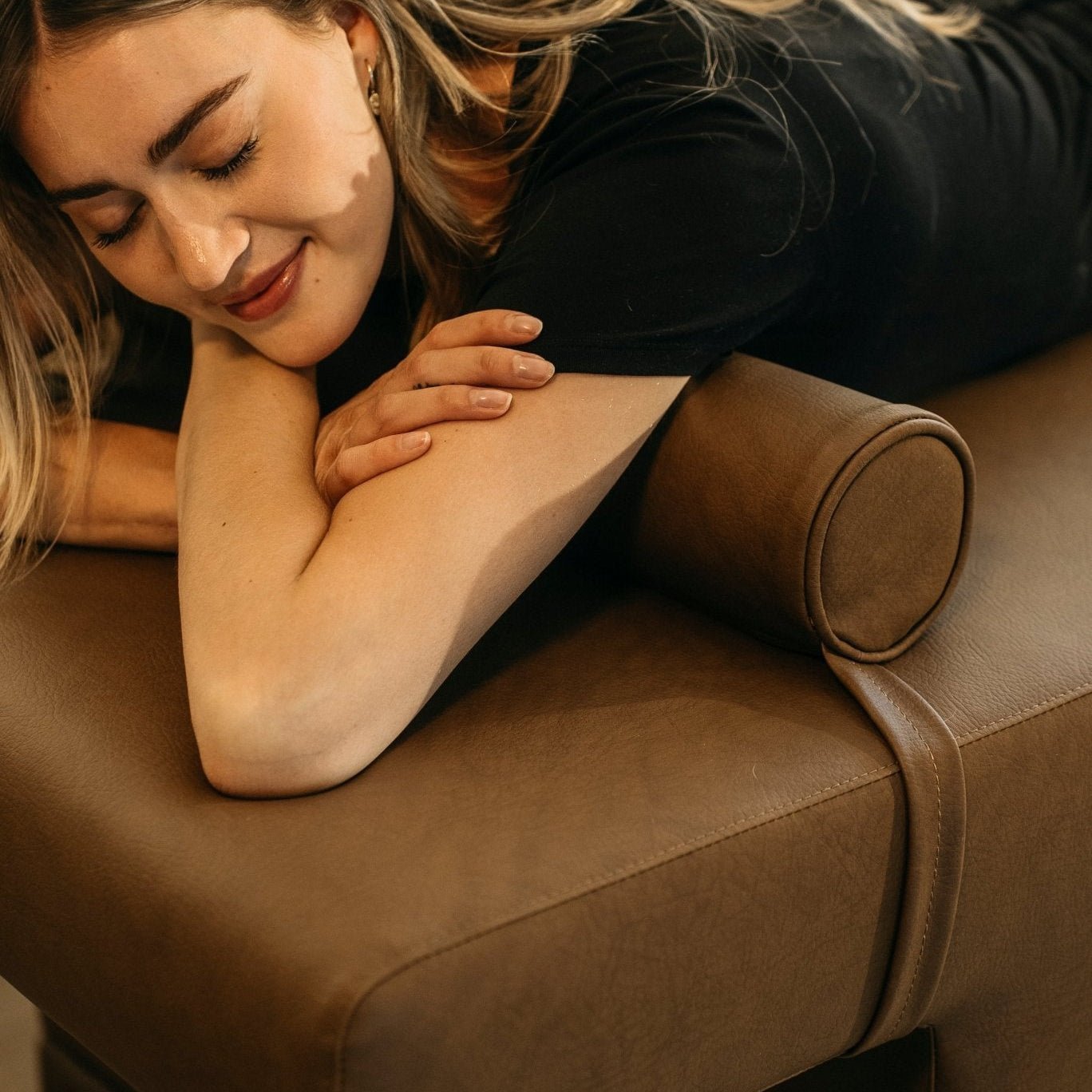
The Oxford has a face opening for prone work, three independent motors for comprehensive positioning control, and the full tensile webbed suspension system under the foam that makes Plush + Oak beds feel fundamentally different from standard tables. The client is suspended, not pressed against a hard base. That distinction matters over 90 minutes.
Every Oxford is made to order. The color you choose becomes part of your room's design language — not a default you design around.
Once you have the bed right, these design directions build rooms that clients want to return to.
Direction One: Warm Sanctuary

Deep warm walls — terracotta, warm burgundy, or aged cognac. Layered warm lighting: dimmable overhead combined with floor or accent sources. Natural textures: linen, raw wood, woven materials. Plants that add life without requiring maintenance. A Plush + Oak Oxford in a warm sand, cognac, or natural tone anchors the room.
This direction creates the feeling of arrival — stepping into a space that is distinctly separate from the outside world. Clients who feel transported by the environment enter the table already partially relaxed. The work starts ahead of where it would otherwise.
Direction Two: Minimal Calm

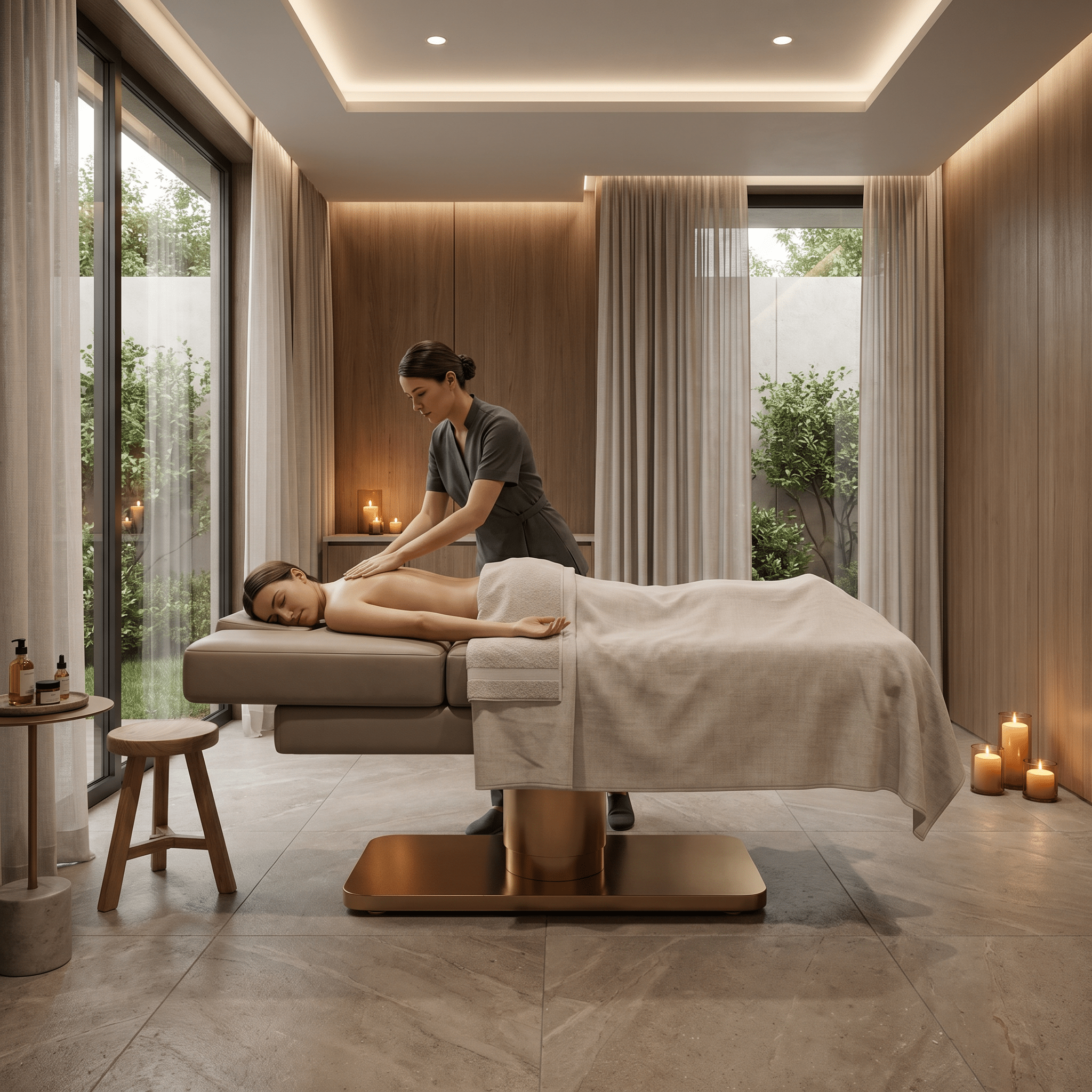
Soft whites and warm off-whites. Clean surfaces and visible organization. Quality over quantity in every element: one well-chosen piece instead of many mediocre ones. A Plush + Oak Oxford in white or warm cream. Natural light managed with quality sheer treatments.
This direction creates a different kind of calm — the calm of clarity rather than enclosure. It photographs exceptionally well and reads as premium across a wide range of clients. For practices that attract clients making considered investments in their health and recovery, the minimal approach communicates that every element was chosen deliberately.
Direction Three: Nature-Grounded

Greens, earthy browns, and stone tones. Botanicals and natural elements that change with the seasons. Wood surfaces that warm the room texturally. A Plush + Oak Oxford in sage, olive, or warm grey. Sound that references nature — water, ambient outdoor tones — rather than generic relaxation playlists.
This direction creates a sensory environment that moves the body's stress response before the massage begins. It is the design equivalent of taking a breath.
Direction Four: Modern Wellness

Clean lines, soft contrast, and materials that communicate investment. Cool whites with warm accent tones. Deliberate lighting — not just dimmed overheads but architectural light that shapes the room. A Plush + Oak Oxford in charcoal or deep slate. This direction positions your practice in the premium wellness space rather than the traditional spa space. It attracts clients who identify as wellness-focused and expect their service providers to reflect that.
Massage Room Layout: Planning the Floor Plan
Before you choose colors or lighting, the layout needs to be right. The physical arrangement of the room determines how the session flows — for you and for the client.
Start with the bed placement. In most rooms, the bed sits centered with the head toward the back wall. This gives you full access to work from every side, and it means the client enters the room facing the bed — the visual anchor that sets the tone before the service begins. If your room has a window, position the bed so natural light falls across the space without hitting the client's eyes.
Working clearance is non-negotiable. You need at minimum 30 inches on each side of the bed and 36 inches at the head and foot. That sounds like a lot in a small room — but without it, you are reaching, twisting, and compromising your body mechanics every session. In a 10-by-10 foot room, a properly sized bed with clearance on all sides fits comfortably. In anything smaller, measure before you commit to a bed size.
The door should open away from the bed if possible. A client lying on the table should not feel the draft or visual intrusion of the door swinging open. If the door opens inward toward the bed, consider whether a simple curtain or screen creates a visual barrier that separates the entry from the treatment space.
Storage placement matters for workflow. Your supplies — oils, towels, hot stones, whatever your practice requires — should be within one step of your working position at the bed. A rolling cart positioned at the head of the bed keeps everything accessible without breaking the flow of a session. If you use a sound machine, position it at floor level near the head of the bed — sound travels upward and creates a natural cocoon effect.
The consultation area, if you have one, should be near the door — a chair, a small surface, and enough space for the client to sit while you discuss the session. This creates a transition zone between the outside world and the treatment experience. The client arrives, sits, talks through what they need, then moves to the bed. That separation is part of the ritual.
For practitioners who share a room with another therapist on alternating days, keep your personal setup modular. A rolling cart, a personal stool, and your own linens or supplies — everything that defines your practice should be moveable without disrupting the shared room layout. The permanent piece — the bed — stays. Everything else adapts.
The Details That Create Retention
Scent is one of the most powerful environmental cues for memory and association. A consistent, well-chosen scent in your practice room creates a sensory anchor that clients connect to the experience of relief. It is one of the reasons they think of you when they are tense.
Temperature management is not an afterthought. A client who is cold on the table cannot relax fully. A room that is consistently comfortable — not just warm enough but right — contributes to the depth of the session.
The transition experience matters. The moments from when a client walks in to when they lie down — how the room receives them, what the check-in feels like, whether there is somewhere comfortable to settle before the service — are part of what they remember.
No loose details. A cord showing, a bolster in the wrong place, a piece of equipment out of sight-line — each small thing erodes the impression of a room that is cared for. A room that is cared for tells clients they will be too.
The Numbers
More than 94% of Plush + Oak customers reported better client retention after upgrading their furniture. 93% saw revenue increase. 87% said the upgrade helped attract new clients.
Retention is the number that matters most in massage. A client who comes back monthly is worth far more than a new client acquired through marketing. The room that makes them come back is an investment that compounds.
Visit plushandoak.com to configure the Oxford and begin building the massage room your clients return to.
Ready to find the treatment bed that anchors your massage suite? Explore our massage bed collection →