


Esthetician Suite Setup: Why Facial Tables Are Failing Estheticians — And What the Best Use Instead
Esthetician Suite Setup: Why Facial Tables Are Failing Estheticians — And What the Best Treatment Rooms Use Instead
Let me be direct: the facial table you're probably using right now is failing you. Maybe not today. But every single day you're working at one, you're making small compromises that add up—for your back, your client's comfort, and your business.
I know this because I've heard it from hundreds of estheticians. They describe the same cycle: invest in a standard facial table, use it for a few years, feel the decline in comfort and durability, watch clients gravitate toward competitors with nicer setups, and realize they made a budget decision instead of a business decision.
The good news: you don't have to stay in that cycle. But first, we need to talk about why the standard facial table fails.
What Most Facial Tables Actually Are
The majority of facial tables on the market are constructed the same way: plywood base with 1-2 inches of foam, topped with vinyl or leather. It's cheap to manufacture. It's easy to ship. It looks professional enough in product photos.
The moment a client lies down, the problems start.
The foam sits directly on plywood. Every time a client's body weight presses into that foam, they're also compressing it against the hard base underneath. Over time—months, not years—that foam compresses. It flattens. The bed that felt supportive in week one starts feeling like a board by week six. Clients notice. They might not say anything, but they feel it.
And then there's the laundry nightmare. Standard facial tables come with sheets. You wash them. You dry them. You replace them. If a client's skin is sensitive or reactive, that's on the sheets too. You're doing laundry between every appointment, and you're still replacing sheets constantly because they wear out faster than the bed.
What Your Back Already Knows
Massage tables and standard facial beds are designed for massage therapists working alongside the table. The leg placement assumes you're standing perpendicular to your client—reaching across, using your body weight for pressure.
You're not doing that. You're standing at the head of the bed, leaning in, doing precision work on the face, eyes, and brows. The leg placement of a standard table forces you into an awkward, forward-leaning posture that stresses your pelvis and lower back.
After a full day of 60-minute facials on a standard table, your back knows it. That dull ache at the end of the day? That's structural. You're not moving correctly because the furniture won't let you.
The Aesthetic Problem Nobody Talks About
Walk into a treatment room with a standard facial table and what do you see? Metal fold up legs, cables, rubber covered "feet". It's a lawn chair trying hard to be a professional piece of equipment. You try hard to make it feel "better". Sheets. Toppers. Bolster pillows stacked to make the positioning work. It looks cluttered. It looks like salon furniture, not design.
Clients walk in and immediately understand the economics of the room. They see the budget furniture and make assumptions about the quality of your services. That's unfair, but it's true. The treatment room is your biggest marketing asset. It tells the story of your business before you say a single word.
Why This Matters More Than You Think
Here's what happens when you upgrade to furniture that's actually designed for estheticians:
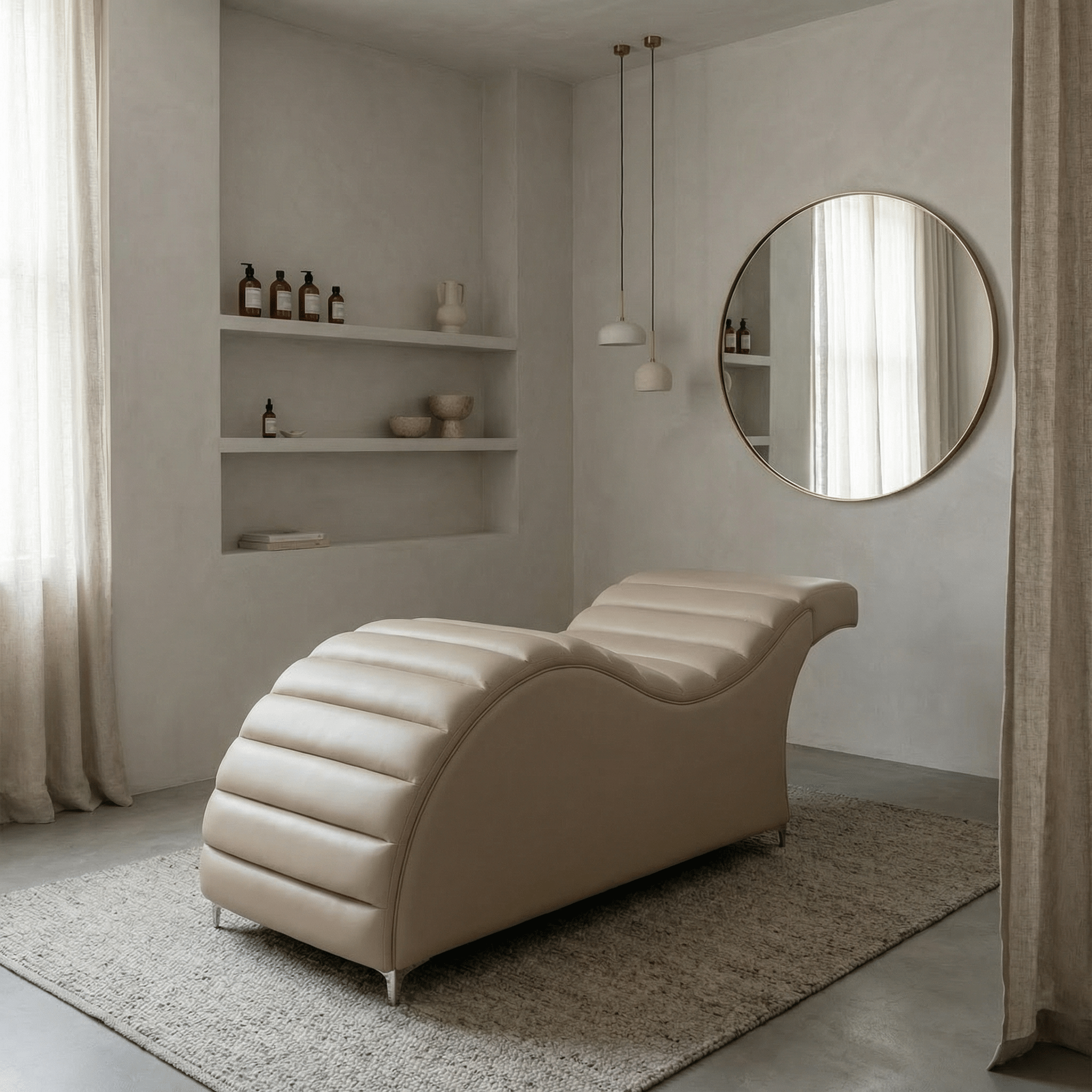
Clients feel the difference from the moment they lie down. A Plush + Oak bed isn't sitting on plywood. It's built on a tensile webbed suspension system—the same engineering principle as a high-end sofa. The foam floats on that webbing. It suspends the client. It responds to their body weight rather than crushing under it.
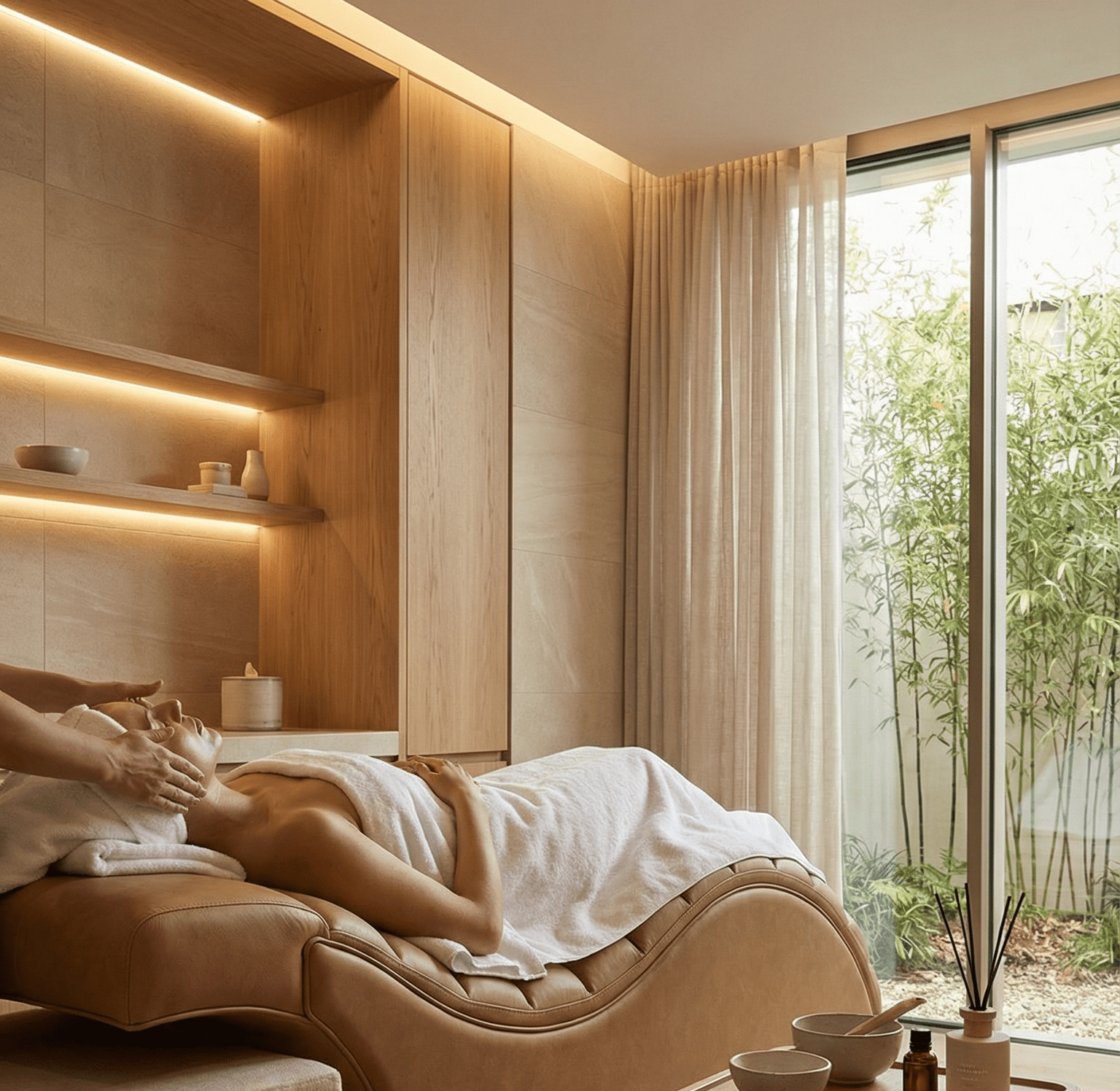
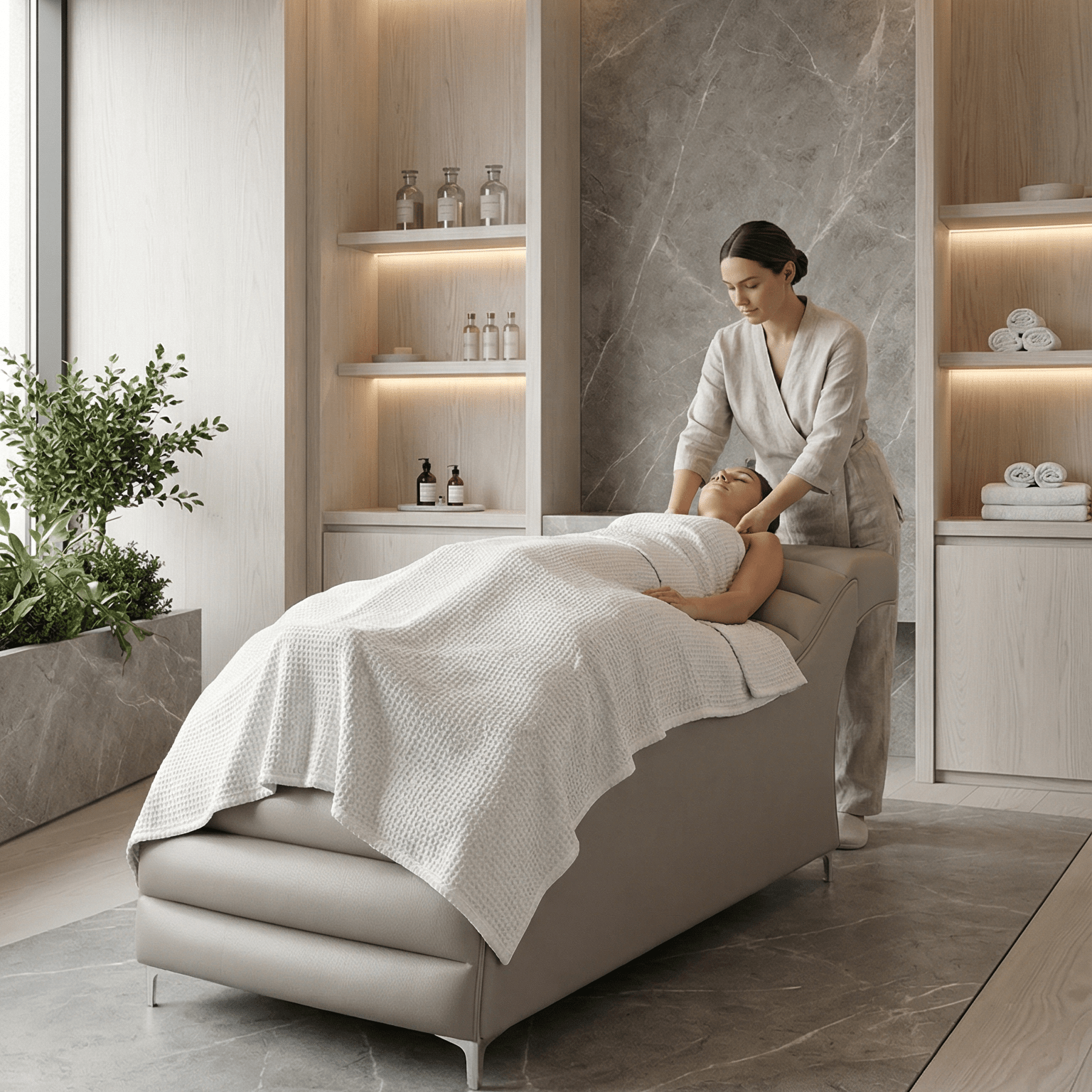
The client experiences what we call anti-gravity support. The ergonomic curve of the bed cradles them naturally. Their head, neck, and shoulders are positioned exactly where they need to be for a 60-minute facial. They're not adjusting. They're not uncomfortable. They're supported.
And here's the part that shocks most artists: you don't need a single sheet. A Plush + Oak bed wipes down. One minute, your client is gone. You grab a damp cloth and wipe the surface clean. No laundry. No replacement linens. No end-of-day pile of sheets in your washer.
The room looks different too. Suddenly there are no toppers, no bolsters scattered around trying to solve positioning problems that shouldn't exist in the first place. The bed is the statement piece. It's usually the most-photographed element of the room. And when it's designed properly, it looks like luxury—because it is.
The Tensile Webbed Suspension System: This Is The Difference
This is the engineering detail that explains why a Plush + Oak bed feels the way it does.
Under the foam is a full tensile webbed suspension—woven tensile webbing that holds the foam in perfect support without letting it compress directly against a hard surface. This system does two critical things:
First, it makes the bed feel alive. You can actually bounce on it. It responds. Most clients have never experienced a facial bed that bounces. They've experienced boards that happen to have fabric on top. The webbed suspension feels completely different.
Second, it protects the foam. Because the foam isn't being crushed against plywood thousands of times over the course of years, it doesn't break down. It doesn't flatten. It maintains its support for years longer than a standard bed. This isn't just about comfort—it's about longevity. You're not replacing this bed in three years. You're keeping it.
Why Clients Ask About Your Bed
When you upgrade to a properly engineered bed, clients ask what you're lying on. That doesn't happen with standard tables. They ask because they feel something different. The answer is simple: suspension and ergonomic design, not plywood and foam.
That question is also a conversion moment. Your client is experiencing something they didn't expect. They're comfortable. They're supported. They're lying on furniture that was actually designed for them. The next time they need a facial, they remember that.
And the next time they recommend a salon to a friend, they mention it.
The Business Case
Let's talk about the actual numbers, because this isn't just about comfort.
Estheticians who switched to Plush + Oak beds reported:
98% said both they and their clients are much more comfortable. That's not a small difference. That's nearly universal.
93% saw their revenue increase. Some saw 10–25%. Others saw 25–45%. A few saw 46–100%. It's not because the bed directly generates revenue. It's because comfortable clients come back more often. They refer friends. They post about their experience on Instagram.
94% said it helped with client retention. Clients stay longer. They book more frequently.
81% saw an increase in positive reviews after upgrading. The room itself becomes a selling point. Reviews mention the comfort and the atmosphere.
68% saw their Instagram following grow after posting photos with the new bed. The room looks professional. Clients want to tag it. They want to share it.
These aren't marginal improvements. This is the difference between a room that clients tolerate and a room that clients choose.
The Esthetician's Advantage
You already know your craft. You already know how to deliver great service. What you need is furniture that doesn't work against you—that works with you.
A facial table that forces you into bad posture undermines your longevity. It makes every day harder. Over years, it costs you.
A facial bed designed specifically for your positioning makes every day easier. It supports your body in the right way. It supports your client in the right way. It lasts. It looks like an investment because it is one.
You're not buying imported furniture with middleman markup. You're buying a bed made to order, designed specifically for artists like you, with construction you can feel the moment someone lies down.
What Comes Next
If you're ready to move beyond the standard facial table, start here: think about what your ideal treatment room feels like. What does it look like? How do you want your clients to feel when they walk in? How do you want to feel at the end of a full day of appointments?
That's the business decision. The furniture should reflect it.
The best treatment rooms aren't using the same facial tables everyone else is. They're using beds engineered specifically for estheticians. They're using suspension systems that make a difference you can feel. They're using color and design as intentional brand choices, not defaults.
That's what separates a salon that clients tolerate from one that clients choose.
Visit plushandoak.com to explore the Edda Cloud and Brynn—the beds designed specifically for facial artists. They're made to order, available in your color, and built on the suspension system that explains why clients ask about them. Want more Versatility? The Vera Collection has full height Adjustment. Or for full electric luxury -- Try the Oxford.
Your back will thank you. Your clients will thank you. Your revenue will thank you.
Ready to find the treatment bed that anchors your esthetician suite? Explore our esthetic bed collection →
Building a complete suite? See everything we make for the modern esthetician: Esthetician Room Furniture →

Written by Courtney Buhler