


How to Choose a Facial Bed: The Comparison Every Esthetician Should Read First
How to Choose a Facial Bed: The Comparison Every Esthetician Should Read First
You need a new facial bed. You've probably shopped around, seen options ranging from $800 to $5,000, and wondered: what's actually different between them?
Most of what you find online looks the same. Fabric. A cushion. Four legs. The photos all look professional. The problem is, the photos don't tell you what you're actually lying on—literally.
Before you make this investment, you need to understand what separates a bed that'll fall apart in three years from one that'll support your business for the long term.
The Critical Difference: Construction
This is the decision that matters most. Everything else follows from how a bed is actually built underneath the fabric.
Most facial beds on the market use the same construction: plywood base with 1-2 inches of foam glued on top, then wrapped in vinyl. It's the industry standard because it's cheap and fast to produce. If you've used a budget facial bed before, you know what this feels like. It's fine at first. Over time, the foam compresses against the plywood underneath. The bed that felt supportive in month one feels flat by month six.
The alternative is a tensile webbed suspension system. Instead of foam sitting on plywood, the foam is suspended on a woven web of tensile webbing—the same principle used in high-end sofas. The webbing holds the foam in perfect support without letting it compress against a hard surface. This means the foam doesn't break down over time. The bed stays comfortable for years.
When you lie on a bed with tensile webbed suspension, you feel it immediately. You can bounce on it. It responds. It feels like you're being supported, not just sitting on a cushion. Clients notice this difference from the moment they lie down.
From a business perspective, this matters because durability is built in. A bed on plywood might last you 3-4 years before it starts to feel compromised. A bed on suspension lasts 8+ years without degradation. That changes the math on your investment.
The Construction Comparison
Standard Facial Bed (Most Common): - Plywood base with 1-2 inches of foam glued on top - Affordable upfront (usually $800-$1,500) - Foam compresses over time as it's crushed against plywood - Requires sheets and frequent laundering - Lasts 3-4 years before noticeable decline - Generic colors and construction
Imported Spa Bed (Mid-Range): - Usually plywood construction with slightly thicker foam - Shipped from overseas with warehousing and freight markup baked into the price - You're paying for the supply chain, not the bed - Similar durability issues as standard beds - Higher upfront cost ($2,500-$4,000) but not higher quality - Limited color options
Plush + Oak Bed (Tensile Webbed Suspension): - Tensile webbed suspension system under the foam - Made to order—you choose the exact color and specifications - 4+ inches of premium foam that doesn't compress - No laundry required—wipes down easily - Lasts 8+ years without degradation - Premium construction with direct pricing—no middleman markup
Here's the reality: when you buy an imported spa bed, you're paying $3,000-$4,000 for a $500 bed. The rest goes to ocean freight, warehousing, regional distribution, and operational overhead. That price doesn't reflect the quality of the product. It reflects the cost of getting it to you.
When you buy a Plush + Oak bed, you're paying for the product and shipping, period. Made to order means no warehousing costs. No inventory overhead. No middleman. Every dollar you spend is going toward the bed itself.
Beyond Construction: The Features That Matter
Once you understand the base construction, here are the other features worth comparing.
Height Customization
Your height matters. A 5'2" esthetician and a 5'10" esthetician need different leg heights to work comfortably. Most facial beds come with one standard leg height. Some offer customization.
Plush + Oak beds come standard with 4" legs, which is ideal for artists between 5'2" and 5'10". If you're outside that range, legs can be customized to 2" (for taller artists who need a lower surface) or 6" (for shorter artists who need to reach the bed comfortably).
This seems like a small detail. It's not. Leg height directly affects your posture and your back health over time. Getting it right matters.
Color And Customization
Standard facial beds come in three options: black, white, maybe one other. You pick what's in stock.
Made-to-order beds let you choose any color. This changes the entire positioning. Your bed isn't a generic salon fixture. It's a deliberate design choice that reflects your brand. If your space is warm and earthy, you choose a warm color. If it's minimal and modern, you choose neutral. The bed becomes part of your visual identity instead of working against it.
This also changes the social media story. Clients photograph well-designed spaces. They post them. They tag them. A bed in your chosen color—not a random stock color—is a design decision that makes your room worth documenting.
What You'Ll Need To Have, Actually
Here's what most facial beds require:
Sheets: Most beds come with fabric, and you need to launder them between clients. Budget replacements. Budget time. Budget laundry service.
Toppers: If the bed's foam isn't substantial enough, you might add a topper to increase comfort. Now you're washing another layer.
Bolster Pillows: For positioning adjustments or to accommodate different client body types. Another item to manage and clean.
Plush + Oak beds eliminate all of this. No sheets required. No toppers needed. No bolster pile growing in your supply closet. The ergonomic curve and substantial foam do the positioning work. You wipe down the bed. You're done.
The time and cost savings here aren't trivial. Over a year, estheticians using standard beds spend hours on laundry and maintenance. With a wipe-down bed, that time disappears.
The Accessories Ecosystem
If you choose a curved bed (like the Edda Cloud or Brynn), you have options for handling specific client needs without buying a second bed.
Conversion Pillow: Fills the ergonomic dip to create a flat surface for stomach-lying treatments. If you get a client who needs to lie face-down, you use the pillow. You're not stuck.
Curve Adjust Bolster Pillow: For shorter clients who need to be positioned closer to you at the head of the bed. Instead of stacking bolsters, you use a pillow designed specifically for this.
Plush Client Pillow: Additional headrest comfort for clients wanting maximum luxury. It's optional, but it's there if you want to upgrade the experience.
Headrest Wraps and Protection Covers: Matching the aesthetic of the bed rather than interrupting it. These are designed to look intentional, not like protective gear.
An accessories ecosystem matters because it means you're not buying a second bed when you encounter a new service need. You're adding a specific tool to your existing bed.
The Ergonomic Curve Question
Most modern facial beds have no level of curve built into them. They get curve by adding pillows and bolsters, and sheets. That's where we're vastly different. 
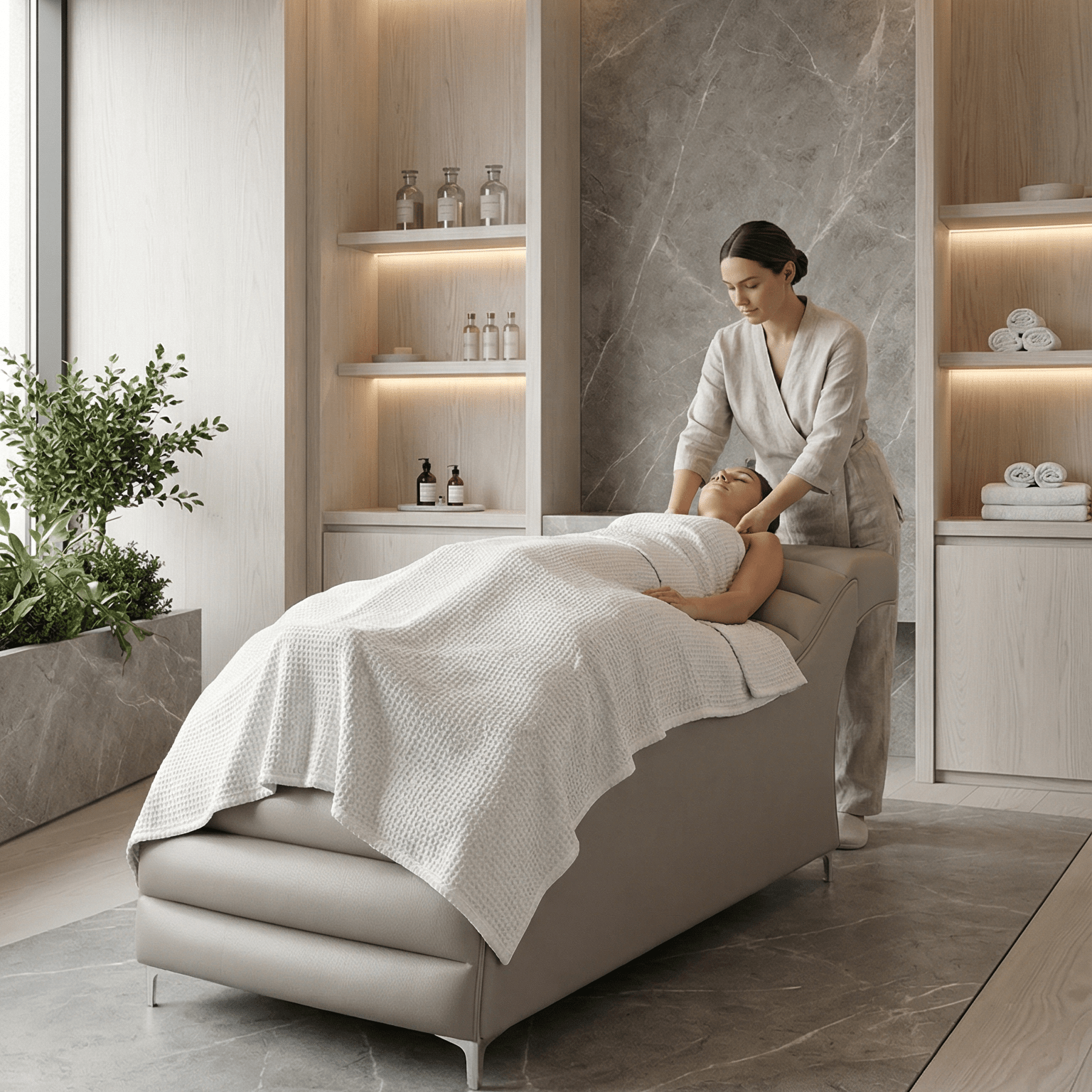
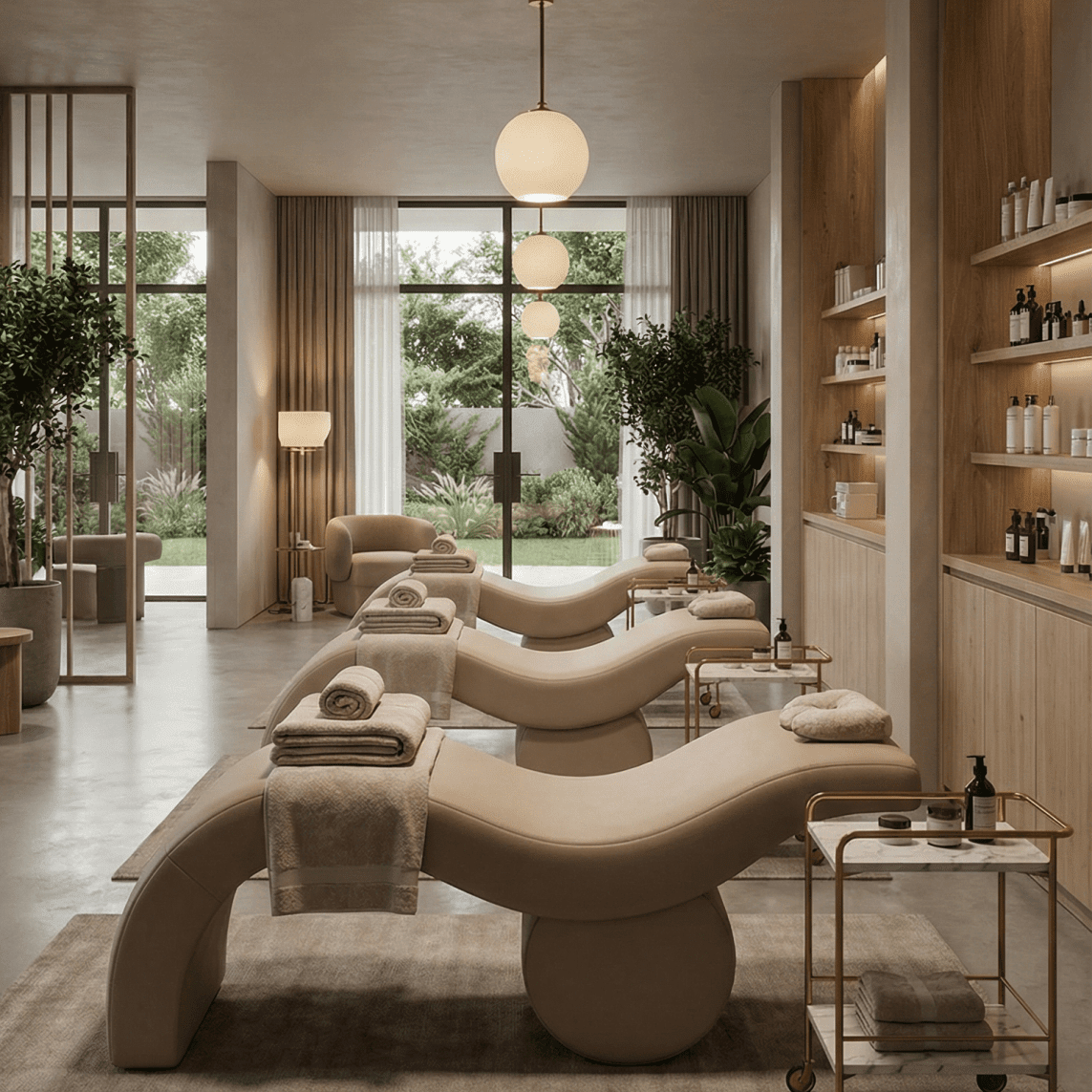
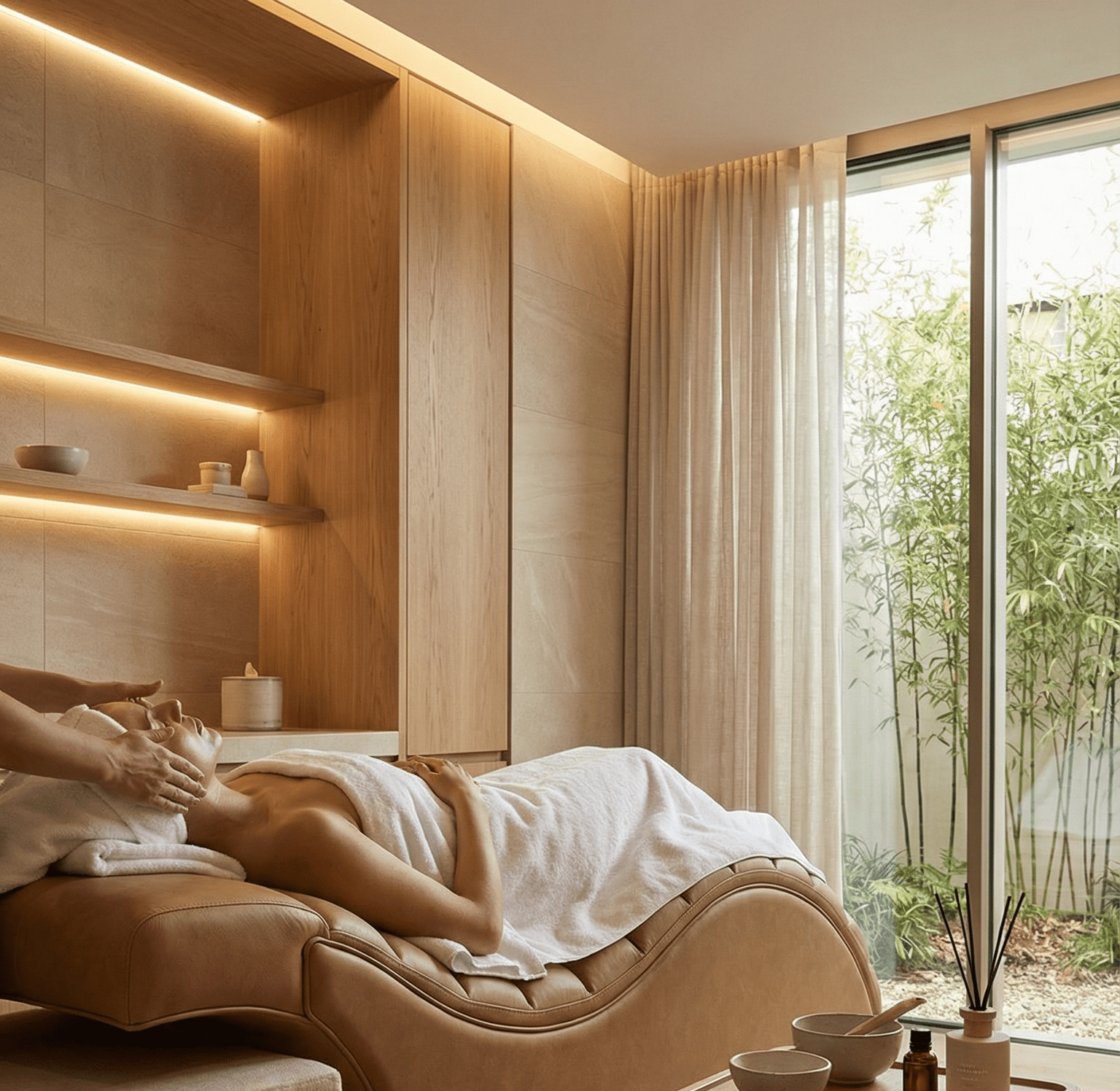
Beds like the Edda Cloud and Brynn have deep anti-gravity curves. When a client lies down, they're cradled. Their head, neck, and shoulders are positioned exactly right for precision facial work. No adjustment needed. The design does the work.
Vera models have a slightly shallower curve, which makes them more versatile for side-lying work and services where the client needs to move around more. If you do a variety of services, the shallower curve actually gives you more flexibility.
Flat beds (like Charlie Flat) are for artists who specifically need a fully flat surface—traditional massage, full body work, or services where the ergonomic curve isn't preferred.
The point: don't assume more curve is always better. Match the curve depth to what your clients actually need.
The Business Math
Let's talk about what this actually costs you over time.
Standard Bed Option: - Initial cost: $1,200 - Lasts 3-4 years, then deteriorates - Sheets and laundry: ~$50/month = $600/year - Replacement bed every 3-4 years
Imported Spa Bed Option: - Initial cost: $3,500 - Lasts 4-5 years with declining comfort - Sheets and laundry: ~$40/month = $480/year - Replacement bed every 4-5 years
Plush + Oak Bed Option: - Initial cost: $2,200-$2,800 - Lasts 8+ years without degradation - No laundry: $0 - One bed lasts through multiple phases of your business
The Plush + Oak option costs more upfront. Over 10 years, here's the actual math:
Three standard beds (every 3-4 years) = $3,600 + $6,000 in laundry = $9,600 total
One Plush + Oak bed = $2,500 + $0 in laundry = $2,500 total
Before you even get to the revenue increase (93% of users saw revenue rise, some dramatically), the durability math alone justifies the upgrade.
Before You Buy: The Questions To Ask
1. What's underneath the foam? Plywood or tensile webbed suspension?
2. Can I customize the leg height? How many options?
3. Can I choose the color? Or am I picking from three stock options?
4. Do I need sheets? Or can I just wipe it down?
5. If I do need sheets, how much am I spending on laundry annually?
6. How long will this bed actually last before it starts to fail?
7. If I need to position a client differently, what accessories are available?
8. Am I paying for the product, or am I paying for supply chain markup?
9. How does this bed perform after two years? Three years?
10. What do artists actually say about this bed after six months of use?
Most suppliers can answer these questions. If they can't or won't, that's telling.
The Decision Framework
Start with construction. If it's plywood and foam, you know the durability ceiling. If it's tensile webbed suspension, you know it'll last.
Then match the features to your actual needs. Do you need color customization? Do you need height adjustment? Do you need leg height options? Do you want to eliminate laundry entirely?
Finally, do the long-term math. The cheapest option upfront rarely stays the cheapest after three years.
Your facial bed is one of your biggest client-facing investments. It's the surface your clients experience during every appointment. It's the centerpiece of your treatment room. It's photographed more than anything else in your space.
Choose the right one, and it becomes a business asset. Clients notice. They remember. They come back. They recommend you.
Visit plushandoak.com to compare options. Read the service-to-bed guide. Pick the one that matches your actual needs—not the one that looks best in a photo.
The right bed will make every day easier. Your back will feel it. Your clients will feel it. Your revenue will reflect it.
Explore our esthetician room furniture here!

Written by Courtney Buhler